The policy additionally included an uncomfortable negative effects. The cellular phone outlaws brought about a considerable boost in student suspensions in the initial year, especially among Black students. Yet disciplinary actions declined during the 2nd year.
“Mobile phone restrictions are not a silver bullet,” claimed David Figlio, an economic expert at the College of Rochester and among the study’s co-authors. “But they appear to be aiding children. They’re participating in college a lot more, and they’re executing a little bit much better on tests.”
Figlio stated he was “concerned” about the temporary 16 percent increase in suspensions for Black pupils. What’s uncertain from this information analysis is whether Black students were more probable to go against the brand-new cellphone regulations, or whether educators were most likely to distinguish Black students for punishment. It’s likewise unclear from these management behavior records if pupils were first given cautions or lighter punishments before they were suspended.
The information suggest that trainees adjusted to the brand-new rules. A year later on, pupil suspensions, including those of Black trainees, dropped back to what they had been before the cellular phone restriction.
“What we observe is a rocky begin,” Figlio included. “There was a lot of self-control.”
The research study, “The Impact of Cellphone Bans in Schools on Student Outcomes: Evidence from Florida,” is a draft functioning paper and has actually not been peer-reviewed. It was slated to be circulated by the National Bureau of Economic Research Study on Oct. 20 and the authors shared a draft with me ahead of time. Figlio and his co-author Umut Özek at RAND believe it is the initial study to reveal a causal link between cellular phone bans and learning rather than simply a correlation.
The academic gains from the cellphone restriction were little, less than a percentile factor, on average. That’s the equivalent of moving from the 50 th percentile on math and analysis tests (in the middle) to the 51 st percentile (still near to the middle), and this tiny gain did not emerge until the 2nd year for the majority of trainees. The scholastic benefits were best for middle schoolers, white students, Hispanic pupils and male pupils. The scholastic gains for Black students and women students were not statistically significant.
I was amazed to find out that there is data on pupil cellphone use in college. The writers of this research study used information from Advan Study Corp., which collects and examines information from cellphones around the globe for company purposes, such as figuring out the amount of individuals visit a particular retailer. The scientists were able to acquire this data for institutions in one Florida school area and approximate the number of pupils were on their cellular phones prior to and after the ban entered into effect between the hours of 9 a.m. and 1 p.m.
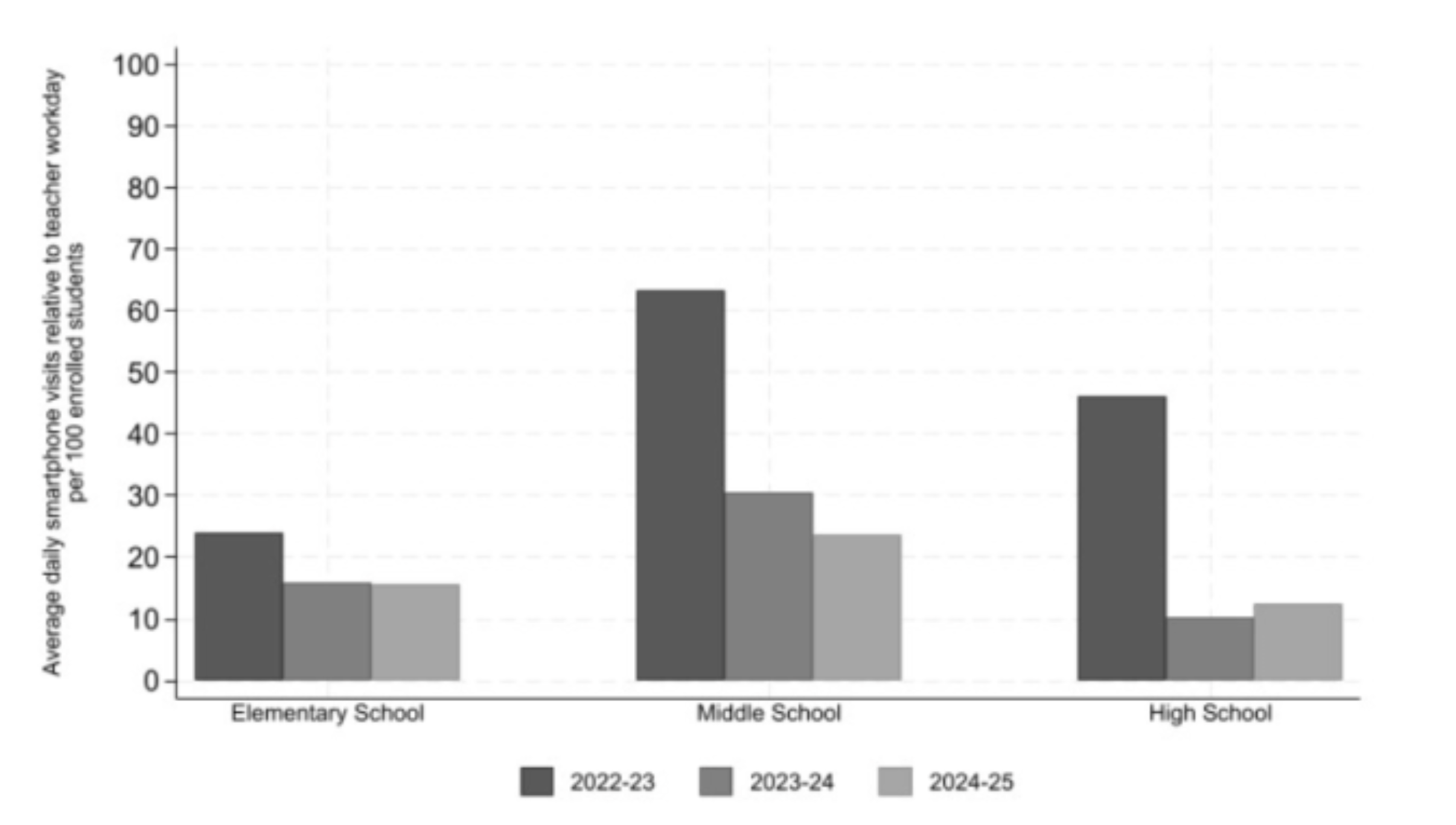
The information showed that greater than 60 percent of center schoolers, usually, were on their phones a minimum of when during the school day prior to the 2023 ban in this specific Florida area, which was not called yet referred to as among the 10 biggest districts in the nation. (5 of the nation’s 10 biggest college areas are in Florida.) After the restriction, that dropped in fifty percent to 30 percent of middle schoolers in the very first year and to 25 percent in the 2nd year.
Grade school trainees were less likely to be on mobile phones to start with and their in-school use fell from regarding 25 percent of pupils before the ban to 15 percent after the ban. Greater than 45 percent of high schoolers got on their phones before the restriction which was up to regarding 10 percent after that.
Average daily smart device gos to in colleges, by year and grade level
Florida did not establish a complete cellular phone restriction in 2023, yet imposed serious constraints. Those limitations were tightened in 2025 which added tightening up was not examined in this paper.
Anti-cellphone policies have actually come to be significantly preferred considering that the pandemic, greatly based on our cumulative grown-up intestine hunches that youngsters are not learning well when they are taken in by TikTok and SnapChat.
This is perhaps an unusual instance in public law, Figlio claimed, where the “data back up the inklings.”
Get in touch with team writer Jill Barshay at 212 – 678 – 3595, jillbarshay. 35 on Signal, or [email protected]
This story concerning cellphone outlaws was generated by The Hechinger Report , a nonprofit, independent wire service concentrated on inequality and development in education and learning. Enroll in Evidence Information and other Hechinger e-newsletters